Chris Kanowitz
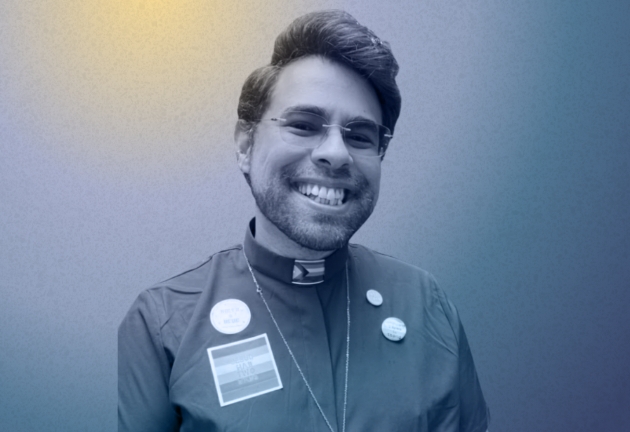
After years of formation and ordained ministry, Chris Kanowitz found himself searching for a way to serve with greater integrity…

For over a thousand years, women served as deaconesses, abbesses, and altar ministers before medieval canon lawyers reshaped the definition of ordination. Follow the historical arc from early Church evidence documented by scholars to the 20th-century movements that reignited the fight for women’s priestly lineage.
—
Proof of women’s calls and priestly lineage is as old as the Church. In Rome, a ninth-century mosaic still bears the inscription “Theodora Episcopa” – Theodora, woman bishop. Church councils and papal letters listed the ordination of abbesses and deaconesses. Scholar Gary Macy chronicles this in great detail. Pope Benedict VIII granted the right to ordain them alongside priests and deacons; Pope Callistus II reminded a convent in Brescia that bishops held the same duty to ordain its abbess as any cleric. Surviving prayer books show the ordination rite for a deaconess and the ordination rite for a deacon as the same ceremony, the same words, changed only to match her gender. In 829, bishops meeting in Paris raised an alarm: in several regions, women were standing at the altar and distributing communion with their own hands. They dealt with it as a problem to be eradicated, rather than a ministry to recognize and encourage.
These examples existed for the better part of a thousand years, until twelfth- and thirteenth-century canon lawyers redrew what “ordination” was allowed to mean, and a reality that had once been unremarkable became, over centuries, unthinkable. That is, until movements like St. Joan’s Alliance emerged in 1911, followed a half-century later by the first “underground” ordinations of Catholic women in Czechoslovakia in the early 1970s, the Episcopal Church’s ordination of women in 1974, the establishment of the Women’s Ordination Conference in 1975, FutureChurch in 1990, and pioneers like Ida Raming, Iris Müller, and Christine Mayr-Lumetzberger of the Danube Seven who set out to be the change they wished to be in the Roman Catholic Church.
For readers who are eager to learn more about women in the early church, see The Hidden History of Women’s Ordination by Gary Macy, and the digital archives at Wijngaards Institute.
To learn more about the courageous story of Catholic women’s ordination during the Cold War in Czechoslovakia, read Out of the Depths: The Story of Ludmila Javorová Ordained Roman Catholic Priest by Miriam Therese Winter, MMS.