2026: RCWP-USA: Faithfully Here, Faithfully Growing
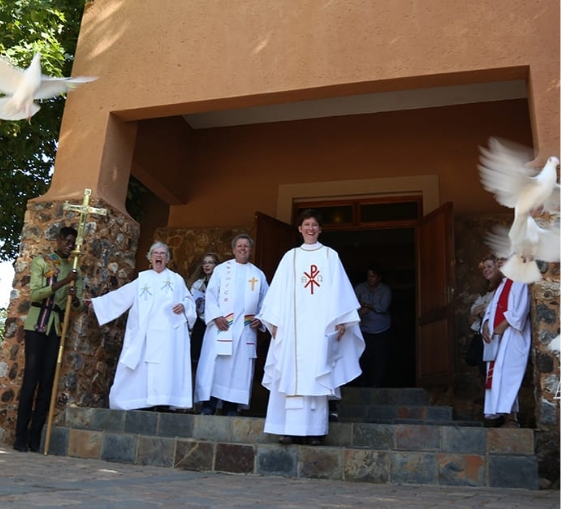
In 2026, over one hundred ordained members of RCWP-USA are living out our callings, in apostolic succession, through acts of prophetic obedience.…

At Roman Catholic Womenpriests-USA, our ministry is grounded in Catholic tradition. We stand firmly within the historic line of apostolic succession while courageously witnessing to a renewed priesthood of equals.

In the Roman Catholic tradition, apostolic succession refers to the line of episcopal ordination reaching back to Jesus and the apostles. Through the laying on of hands by a validly consecrated bishop, the sacrament of Holy Orders confers the grace and authority to celebrate the sacraments for God’s people.

The modern movement of Roman Catholic Womenpriests began on June 29, 2002, aboard a ship on the Danube River.
In the early 1970s, during the Cold War, Bishop Felix Davidek ordained a small group of women to priesthood in the underground church of Czechoslovakia. Those women priests, including Ludmila Javorová, are our honored foremothers.
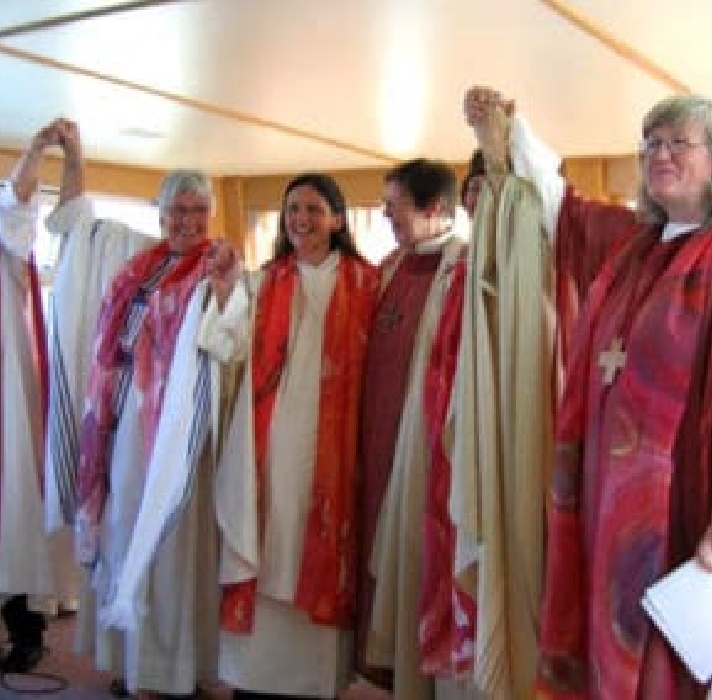
The modern movement known as Roman Catholic Womenpriests was born on June 29, 2002, aboard a ship on the Danube River, with the first known public ordinations of women.
Catholic theology makes a crucial distinction between valid and licit (legal).
Yes, a sacrament is valid when performed by a validly ordained minister using proper matter, form, and intention. Because our ordinations follow the historical Roman Catholic rite with laying on of hands and invocation of the Holy Spirit, RCWP ordinations are sacramentally valid.
No. Current canon law (Canon 1024) restricts ordination to baptized males. By continuing the ordination of women in apostolic succession, RCWP acts in deliberate disobedience to an unjust law while maintaining fidelity to the sacramental life of the Church.

“We choose to obey God rather than human authority.”
— Acts 5:29
This understanding of apostolic succession offers peace of mind and spiritual grounding to everyone who participates in our sacramental life: