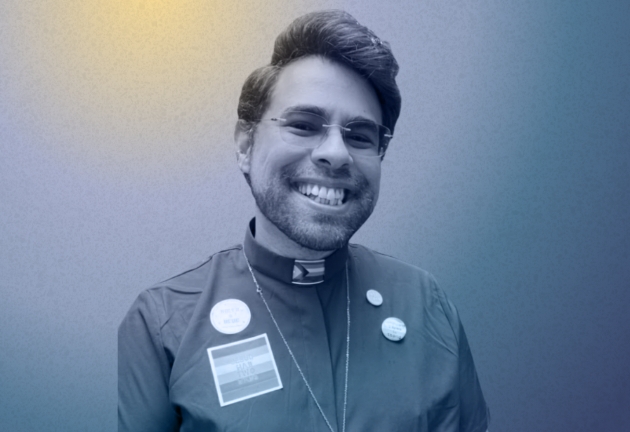
Chris Kanowicz
After years of formation and ordained ministry, Chris Kanowicz found himself searching for a way to serve with greater integrity…

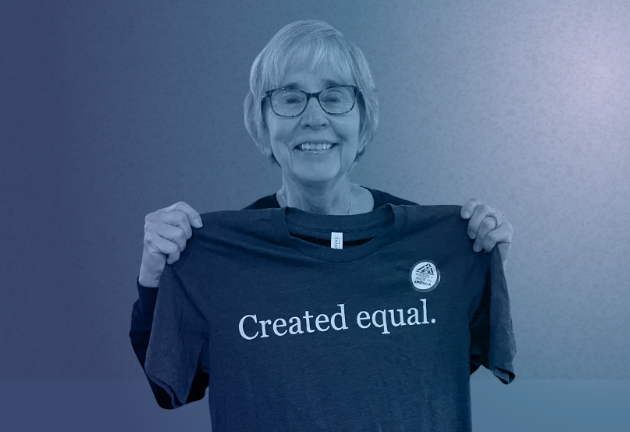
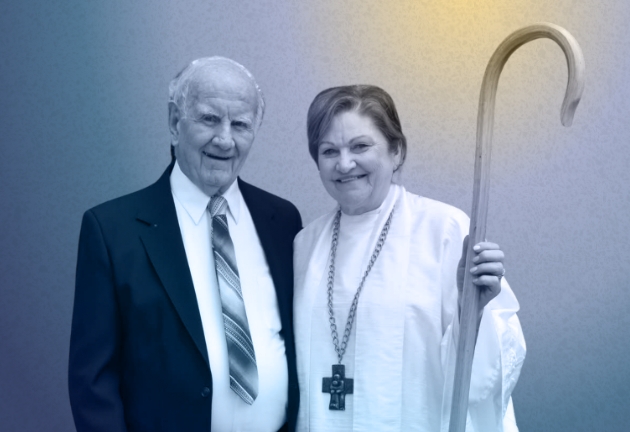
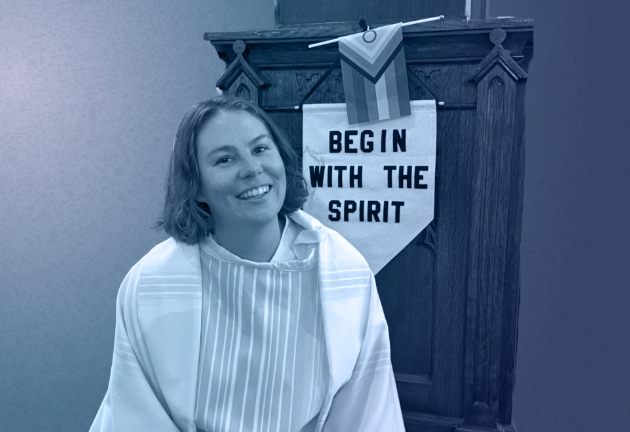
This interview was first printed in the Southeastern Pennsylvania Women’s Ordination Conference’s publication, “Equal wRites” in 2010, four years after Eileen’s ordination. The responses below update her views.
—
Excerpts from an Interview with Eileen McCafferty DiFranco,
Roman Catholic Womenpriest, Philadelphia, PA
HOW HAVE THEIR LIVES CHANGED?
WOMEN ANSWERING THE CALL TO PRIESTHOOD
EW: Please describe your feelings when you first realized that you were finally an ordained priest.
Eileen: Our organization, Roman Catholic Womenpriests, had a retreat in a beautiful monastery not far from Pittsburgh, where I was going to be ordained in a couple of days. I spent quite a bit of time walking in the garden, thinking and praying. At one point in time, the wind began to blow quite hard, right in the middle of a warm, sunny day. The wind blew so hard that I backed up against a wall, feeling the warm wind on my entire body. I recall saying, “Here I am Lord. I have heard you calling. I am ready.” This day prepared me for the ordination, which was a very humbling experience. I was aware of the historical importance of our ordination on the three rivers in Pittsburgh in 2006, but I was also aware of the fact that I stood on the shoulders of countless generations of wise, Spirit-filled women who had prepared the way for us. I continue to feel humbled.
EW: How has your ministry evolved over the past sixteen years?
Eileen: I was fifty-four when I was ordained. Now I’m seventy-four, older and much wiser.
I believed that “If we build it, they will come.” And they have. The Community of St. Mary Magdalene, founded in 2007, grew from a community of ten to a hybrid zoom/in person community of a hundred. Many more people follow us online. Our community includes folks from Pennsylvania, Delaware, Vermont, Indiana, England, Ireland, and Belgium. We have Mass every Sunday at 9 AM and administer all the sacraments. We also provide community prayer and classes on zoom. Everyone is welcome to communion, and we set no standards for belonging.
I think our community grew because there are many people who are interested in belonging to a church that is egalitarian, where there isn’t a bright line between men and women, ordained and non-ordained. Too many supporters of women’s ordination place too much hope in men like Francis and Leo to change the all boys’ club, only to be bitterly disappointed when they retrench their power by throwing their weight around and doing hurtful things like forbidding the non-ordained to preach. Even benevolent popes are not ready to cede power to a group the institution has vilified and excluded for centuries. The few women who allegedly have power in the Vatican are poster women for a rock-solid male bastion that is not the least bit interested in substantive change. These women are minor concessions rather than policy change. To rephrase a 1960’s cigarette commercial, the hierarchy would prefer the church to die rather than ordain women.
Thus, St. Mary Magdalene exists in spite of endemic male prejudice. We treat women’s ordination as established fact rather than as a hope. We refuse to petition the church to recognize us.
There are three priests in our community, Caryl Conroy Johnson, Kathy Gibbons Schuck and I. However, our community is a discipleship of equals, and the community, rather than the priests, make all decisions. The community recognizes the gifts of all our members, and all voices are heard without the need to measure their worth against an institutional standard. Thus, we are a community owned and operated by the People of God rather than by a privileged group of men who are committed to only one side of the story.
EW: What have been your most memorable moments?
Eileen: Just being together in prayer each and every week is memorable. Our growth and development have been so amazing! We remain a work in progress, a people on the move. It is remarkable what people will do when asked. They will preach, pray, plan, and preside. Before Covid, our community shared interfaith worship services with two United Methodist communities where we broke bread together because we share one faith, one creed, and one baptism.
EW: What has been most challenging?
Eileen: For me it’s having enough time. All of us in RCWP are financially self-sustaining and (like the apostle Paul) and many have other jobs. (I am now retired from my job as a certified school nurse). In many ways, this is a good thing, because we experience firsthand the problems of functioning in the working world. I also take my job of preaching very seriously. It takes countless hours of prayer, scripture reading, study, and spiritual preparation to prepare a homily that resonates with the assembly. So, time management is and has been my most pressing challenge.
EW: Most unexpected?
Eileen: Just being here. If you had asked me twenty-seven years ago when I first entered seminary what I would be doing at age 74, I can assure you that I would not have answered being in ordained ministry. And yet, it is not surprising at all. Women’s paths tend to have a different user’s manual. Many of us, especially those of my generation, were programmed to do only two things – get married or enter the convent. In the last sixty or so years, women have rejected the expectations of men and awakened to possibilities they could only dream about in their younger years. I have been so fortunate to live through the heady days of the civil rights and women’s rights movements which have changed the lives of so many people in a comparatively short time even though we still have a long way to go.
EW: Have you encountered resistance, criticism, or hostility? If so, how have you been able to deal with this?
Eileen: No one has ever challenged me face-to-face. That takes a great deal of courage that most critics don’t seem to have. It amazes me how some people feel justified in throwing email bombs or sending letters to a complete stranger, accusing them of all sorts of things without even knowing them or speaking to them personally. After my ordination in 2006, I was “condemned to hell” on multiple occasions. The venom pouring in from emails from alleged orthodox Catholics was breathtaking. My character and motive for seeking ordination were impugned. In 2006, Justin Rigali, the cardinal archbishop of Philadelphia called me a scandal in a letter he sent via special delivery even as the clerical sexual abuse scandal under his and his predecessors’ tenures splashed all over our local newspapers, filling them with clerical filth.
In 2008, Benedict claimed that ordained women “excommunicated themselves” just like women used to “get themselves pregnant” – without benefit of man. In a move that defied all logic, the hierarchy also equated the severity of the “sin” of women’s ordination with pedophilia because the former struck at the “heart” of the church!
But the deepest of all came from the pastor of the peace and justice parish to which I belonged for 20 years, a man who baptized my two youngest children. He deputized a member of the parish staff to come to my home and ask me not to receive communion even though I had left the parish five years earlier to form St. Mary Magdalene.
I think his action hurt him– and the parish– more than it injured me. If the bishop ever questioned him about me, all he had to say was that I no longer attended the parish. Instead, his fear led to an unkind act.
I know that some people act in uncharitable ways when fear overcomes them, so I bear no malice towards him. I was, however, greatly disappointed and deeply hurt. There have always been people who have acted without fear at great risk to their careers or even their lives. These are the people who have given me sustenance.
EW: What do you see as the future for your own ministry? For women’s ordination in general?
Eileen: As Gamaliel, the rabbi said in Acts 5 said, if a movement is of God, no one can stop it– even the Catholic hierarchy. RCWP has grown from seven bold women ordained on the Danube River in Germany to over a worldwide organization. I think that women’s ordination will continue to grow. No human being can put the lid on the Spirit. We now live in a 21st century world where the language of eminence of degree no longer makes sense. The institutional church can no longer speak out of both sides of its mouth and demand equal treatment of all people in the world while continuing to discriminate against women within the walls of the church.
I fear, however, that instead of walking into churches led by women priests, the dissatisfied are just walking away. The third largest denomination in America is former Catholics. The church has bitterly disappointed people too many times. The sexual abuse scandal caused a mass exodus, and every blow by the Vatican, like the recent one forbidding the non-ordained from preaching, causes folks to throw up their hands in despair and leave. They are not willing to have their hearts broken again. That’s why it is so important for RCWP NOT to repeat the institution’s colossal mistakes.
EW: Do you have any new insights, thoughts, or advice about women taking the route to ordination?
Eileen: As I said earlier, those of us who have been ordained stand on the shoulders of giants; women who have prepared the way for us at great cost to themselves. Those women were often ostracized and condemned by both society and the church. It’s less dangerous now because the church has no secular power to back up its ecclesiastical threats. However, women must know that if they work in any capacity in the church and pursue ordination, they will be fired. This is unfortunate because it precludes younger women from pursuing ordination.
It is equally sad for the People of God who are deprived of new insights and a voice to express them. Consequently, the Church lumbers on, severely handicapped by its refusal to acknowledge the life experiences of one half of its population.
While most of us in RCWP refuse to recognize or accept excommunication from the hands of the hierarchy because no human being can separate another human being from God, priesthood does not come without its slings and arrows. Some friends will abandon you. Men who passionately preach justice from the pulpit will not publicly support justice for ordained women. Some of our members have been cast out of prayer groups and other long-standing associations within their parishes. While there is support and love for those members of our Catholic communities who have committed heinous crimes against children, there is no such compassion for women priests.
Yet, I wouldn’t change one thing that has happened. Amidst the hurts, the movement grows. Jesus promised us that ministry and discipleship would not be easy. Faith in God rather than fear of the unknown or of change moves us women priests forward. The Holy Spirit has not failed us yet. I trust She never will.